Crowning of Nature.
The First Cycle of Separations and Conjunctions.
18  - 19      20  - 21      22  -  23      24  -  25      26  -  27
Sep - Con     Sep - Con     Sep -  Con     Sep -  Con     Sep -  Con

Fire  Fire          Water          Air            Fire           Air
           \              \             \
Air   Air   \       Air    \       Fire  \        Water          Water
             \              \             \
Water Water   Fire  Fire    Water  Water   Air    Air            Fire

Earth Earth   Earth Earth   Earth  Earth   Earth  Earth   Earth  Earth
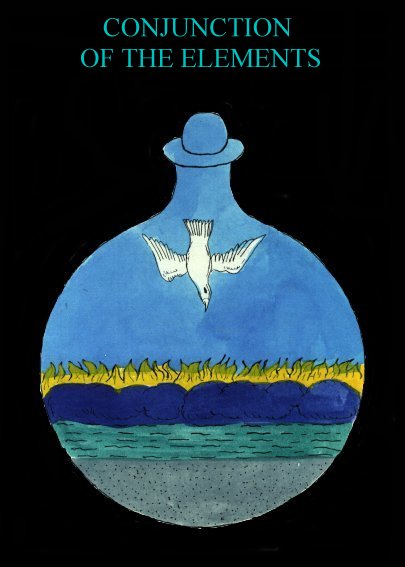
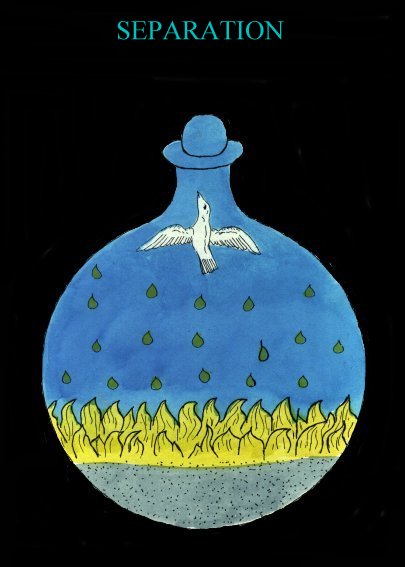
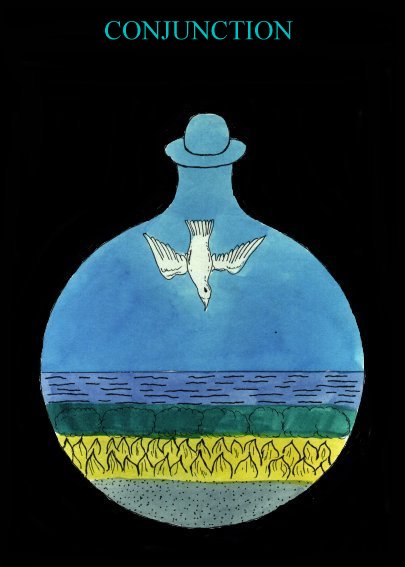
During the Separation phase each element in turn remains at the bottom of the flask with the Earth, this element being the one which stood at the top of the flask during the previous Conjunction phase. The two elements remaining in the upper part of the flask during the Separation phase are free to metamorphose into each other, and during the following Conjunction, this new interrelationship passes into a more rigid and fixed form in the bottom part of the retort, where all four elements come together again.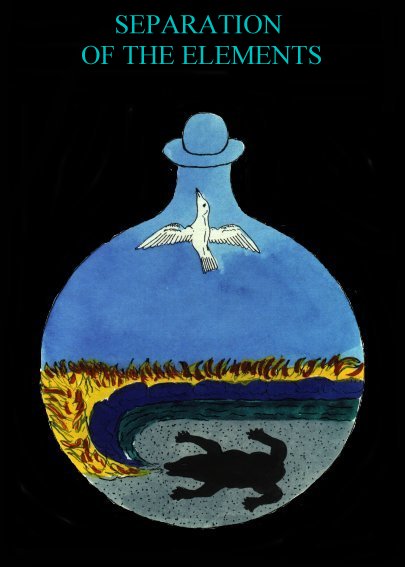
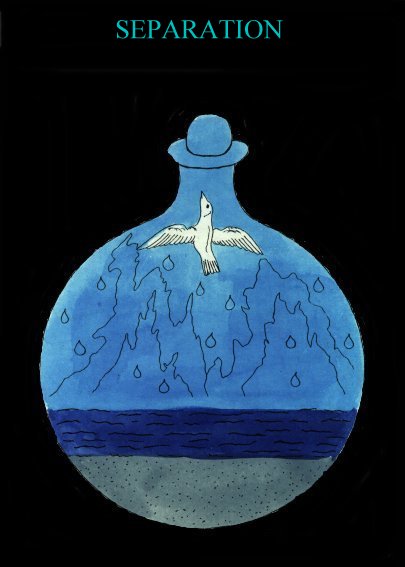
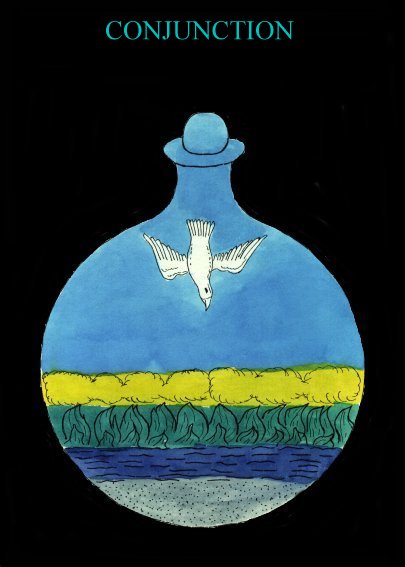
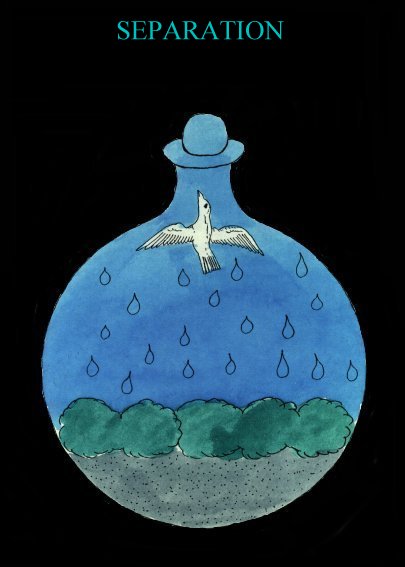
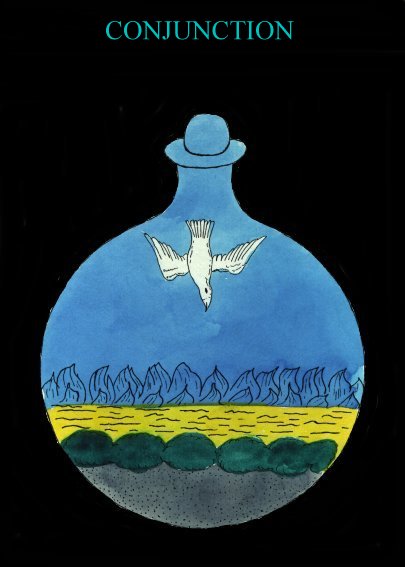
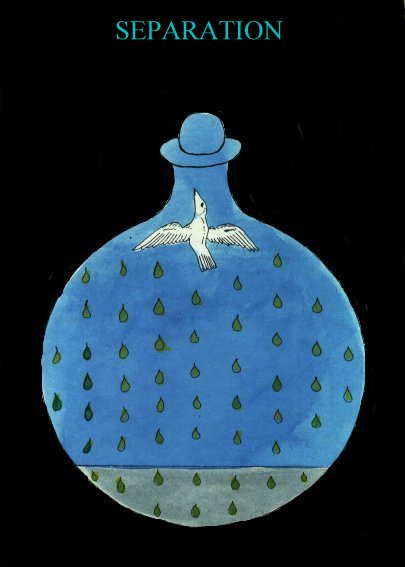
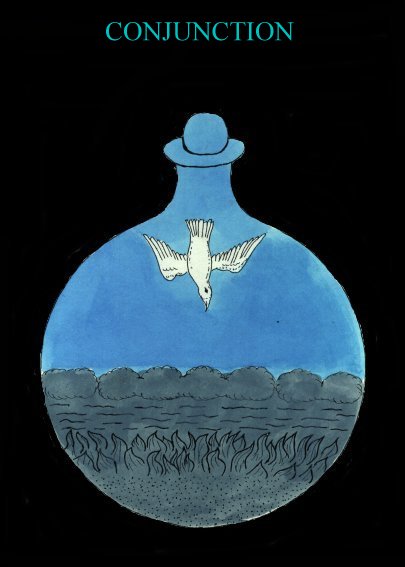
18  -  19       20  -  21       22  -  23       24  -  25       26  -  27
Sep -  Con      Sep -  Con      Sep -  Con      Sep -  Con      Sep -  Con

Yellow Yellow          Blue            Yellow          Blue            Grey

Blue   Blue            Green           Green           Yellow          Grey

Green  Green    Yellow Yellow   Blue   Blue     Green  Green           Grey

Grey   Grey     Grey   Grey     Grey   Grey     Grey   Grey     Grey   Grey
These can be further analyzed so that one begins to see two cycles of transformation working through this process.
     Fire                 Fire
    /   \                /   \
   /  A  \              /  B  \
  /       \            /       \
Air--<--Water        Air-->---Water

[Clockwise]          [Anti-clockwise]
A being a subtilization, a movement from Water to Air to Fire, while B is the opposite, a fixing or descent into more dense states.
Air                                 Blue
Water                               Green
        corresponding to colors
Fire                                Yellow
Earth                               Grey
which we find acts as the starting point for the second cycle of Separations and Conjunctions in figures 31-36.